The School of Good Services, co-founded by Lou Downe, former Director of Design for the UK Government, and Sarah Drummond, former CEO of UK service design agency Snook, helps organizations build the design skills they need to deliver great services through training, coaching, and community building.
About 80 public servants from ministries across the BC provincial government attended the training, which covered key principles of good design and how to create the right conditions for connected services to flourish.
Gordon Ross, Vice President and Partner at OXD, helped facilitate the School of Good Services sessions in Victoria. This was part of a North American trip where Lou and Sarah delivered training in Chicago, Victoria, and Toronto.
OXD is proud to sponsor the 2025 Vancouver Service Jam, a collaborative, high-energy event where participants from across the globe will prototype innovative services in just 48 hours.
A Service Design Jam is an immersive experience where teams work together to address real-world challenges. Guided by a secret global theme, Jammers use design thinking and service design methodologies to develop practical, human-centred solutions. By the end of the weekend, each team will have created a functional prototype and a strategic plan for implementation.
At OXD, service design is at the heart of what we do. We partner with organizations to co-create solutions that truly meet user needs, and this Jam aligns with our commitment to human-centred innovation. By sponsoring this event, we’re fostering creativity, collaboration, and growth within the local service design community.
The Vancouver Service Jam runs from Friday, February 21 to Sunday, February 23. Service Designers from OXD will be attending to encourage and mentor participants as they tackle design challenges. Visit the event website for more information.
We’ve been exploring the relationship between human behaviour and technology for over 30 years. Learn more about how we use service design methods to create tailored solutions that place humans at the forefront.
The Ministry of Environment and Parks is responsible for the protection, management, and conservation of BC's water, land, air and living resources—including their network of recreation sites and trails. In addition to BC’s Provincial Parks, Recreation Sites and Trails BC (formerly BC Forest Service recreation sites and trails) provides numerous recreation opportunities through sound management of public areas on Crown Land, often in some of the most remote and beautiful parts of BC’s backcountry.
In order to provide visitors with high quality recreation opportunities that meet their needs and styles, RSTBC needs to publish reliable, up to date site and trail information. That same information and data is also crucial for staff decision-making and management of the recreational areas. Good digital tools make for great visitor experiences, effective stewardship of the land, and productive use of staff time.
The Ministry of Environment partnered with OXD as part of their four-year digital transformation strategy to better understand how they might improve the ecosystem of tools for Recreation Sites and Trails (RST) staff and visitors alike.
Through a comprehensive design research phase, we uncovered the needs of users, held opportunities workshops, and set clear priorities for their Product Owner, breaking trail for a digital experience that helps visitors get what they need and enabling staff to focus on what they do best.
We began the project with in-depth discovery research to understand the current system, how it’s used, and the pain points RSTBC staff are experiencing. We held user interviews with staff and visitors where we focused on articulating and understanding their needs.
This qualitative research was then used to help us identify key insights about the current system’s challenges and opportunities in collaborative workshops with the project team. We highlighted two essential perspectives to address:
For visitors: Reliable, up-to-date information is critical for trip planning and recreation. They want an engaging, intuitive website that simplifies their experience before, during, and after their visits.
For staff: Managing a vast network of sites and trails is no small feat. Staff need tools that streamline administrative tasks and free up time for high-value activities like site management and financial planning.
By balancing these perspectives, we were able to deliver findings and a clear set of priorities for the RSTBC team that will enhance both the public experience and operational efficiency.
Our collaborative efforts led to the delivery of a robust set of recommendations that validated the need to redesign the public website and guide the transformation. Highlights include:
Enhancing content: Aligning site information with how people plan their outdoor adventures, ensuring relevant, consistent content.
Improving usability: Addressing accessibility concerns and providing an easier, more flexible approach to how visitors can find and explore recreation sites and trails.
With these priorities in place, our team delivered the findings to the RSTBC Agile project team to incorporate into the design and build of the new website. OXD is continuing to do more in-depth visitor research to better understand the people who visit Recreation Sites and Trails.
We’re thrilled to announce that OXD has been recognized as a Great Place to Work® in Canada—again! Being awarded this for the second year running speaks to the heart of our company culture: a supportive, engaging, and fun environment where employee feedback genuinely matters.
Here’s what our team has to say about working at OXD:
It’s a safe, welcoming workplace for everyone
We treat each other fairly
We really care about each other
Work-life balance isn’t just a buzzword—it’s part of who we are
Success in a professional services firm comes when you focus on your people. Put your employees first: If you get that right, the rest will follow.”
Darren Gibbons, President, OXD
At OXD, we’re on a mission to set the bar in the Canadian tech industry for what a great workplace can be. It’s not just about attracting top talent, but keeping it by creating a culture where everyone feels supported, inspired, and ready to innovate. Great Place to Work® Canada tells us that certified companies like ours see 50% higher employee retention. For us, this award is a reminder that our core values are more than words—they’re lived every day in the experiences of our team.
A huge thank you to every member of the OXD team for making our workplace amazing. Together, we’ll keep growing, making an impact, and inspiring others to put workplace culture front and center.
The British Columbia Ministry of Education and Child Care engaged OXD to improve how they manage and report on their technology portfolio. After adopting Agile practices, the Ministry’s Digital Strategies and Services Branch (DSSB) found that they lacked standardized reporting across projects. This created challenges around visibility, status tracking, and executive communication. They sought OXD’s help to improve their ability to make timely, informed decisions and align information technology (IT) initiatives with broader strategic goals. The result was a transformational shift in how DSSB manages their technology portfolio.
We began by collaborating with DSSB to design and implement a Strategic Portfolio Management Framework that would bring clarity, consistency, and efficiency to how projects are managed and communicated across the organization.
Our work started with a deep dive into the Ministry’s current state. Through stakeholder interviews and workflow analysis, we identified key gaps in reporting and areas for improvement. We created a service blueprint and delivered a findings report with actionable recommendations, which we presented to their executive director. A visioning workshop followed, where we worked with leadership to define the mission for a future Portfolio Management Office and prioritize key initiatives to support it.
From there, we enhanced Jira and Confluence workflows to better support Agile practices. This included the introduction of customized templates and dashboards to standardize reporting, streamline backlog management, and enable real-time collaboration across teams.
Building on our discovery insights, we developed a tailored Strategic Portfolio Management Framework. This included standardized processes for tracking project health indicators such as budget, scope, timelines, and resource allocation—making it easier for DSSB to track progress, identify risks, and make data-driven decisions. We also created a suite of practical tools and templates for planning, risk management, and reporting, helping to ensure consistency and transparency across all projects.
The need for strategic portfolio management is more critical than ever. As Gartner notes in their 2024 Magic Quadrant™ for Strategic Portfolio Management, “by 2025, 70% of digital transformation investments will fail without strategic portfolio management.” The Ministry’s investment in this framework demonstrates a forward-thinking approach—ensuring that digital initiatives are not only well-executed but also aligned with strategic outcomes.
Throughout implementation, OXD provided hands-on support via collaborative workshops, working closely with DSSB teams to troubleshoot challenges and fine-tune the new framework. Our approach was iterative and feedback-driven, ensuring that the final solution was not only effective but also adaptable to the real-world needs of the organization.
The newly established Portfolio Management Office now provides structure and visibility across projects, aligning IT initiatives with strategic objectives and improving overall team efficiency. By integrating Agile practices with standardized processes and collaborative tools, DSSB gained both the clarity and confidence needed to manage their portfolio with greater impact.
Just as importantly, our comprehensive co-creation approach empowered DSSB staff to take ownership of the new framework and roadmap for improvement—ensuring it remains sustainable and continues to evolve long after implementation.
From September 17 to 19, 2024, 11 OXD team members joined seven other teams for the “Cryptid Coders in the Wilderness of BC” Hackathon, organized by the BC Ministry of Water, Land, and Resource Stewardship (WLRS). The challenge was to solve a real-world problem or identify new opportunities around accessibility challenges for BC Parks.
Fun fact
To align with the “Cryptids of BC” theme, we used AI to generate the team name “Gastown Gumberoos”—a reference to a mythical, leathery-skinned bear from lumberjack folklore.
Illustration of The Gumberoo by Richard Svensson, 2008.
OXD has been working with BC Parks on improving the bcparks.ca website over the past few years.Because of our long-standing relationship, we wanted to use the Hackathon to test cutting-edge AI technologies and crowdsourcing approaches to enable BC Parks to provide accurate, up-to-date information about accessible facilities in the parks.
The problem
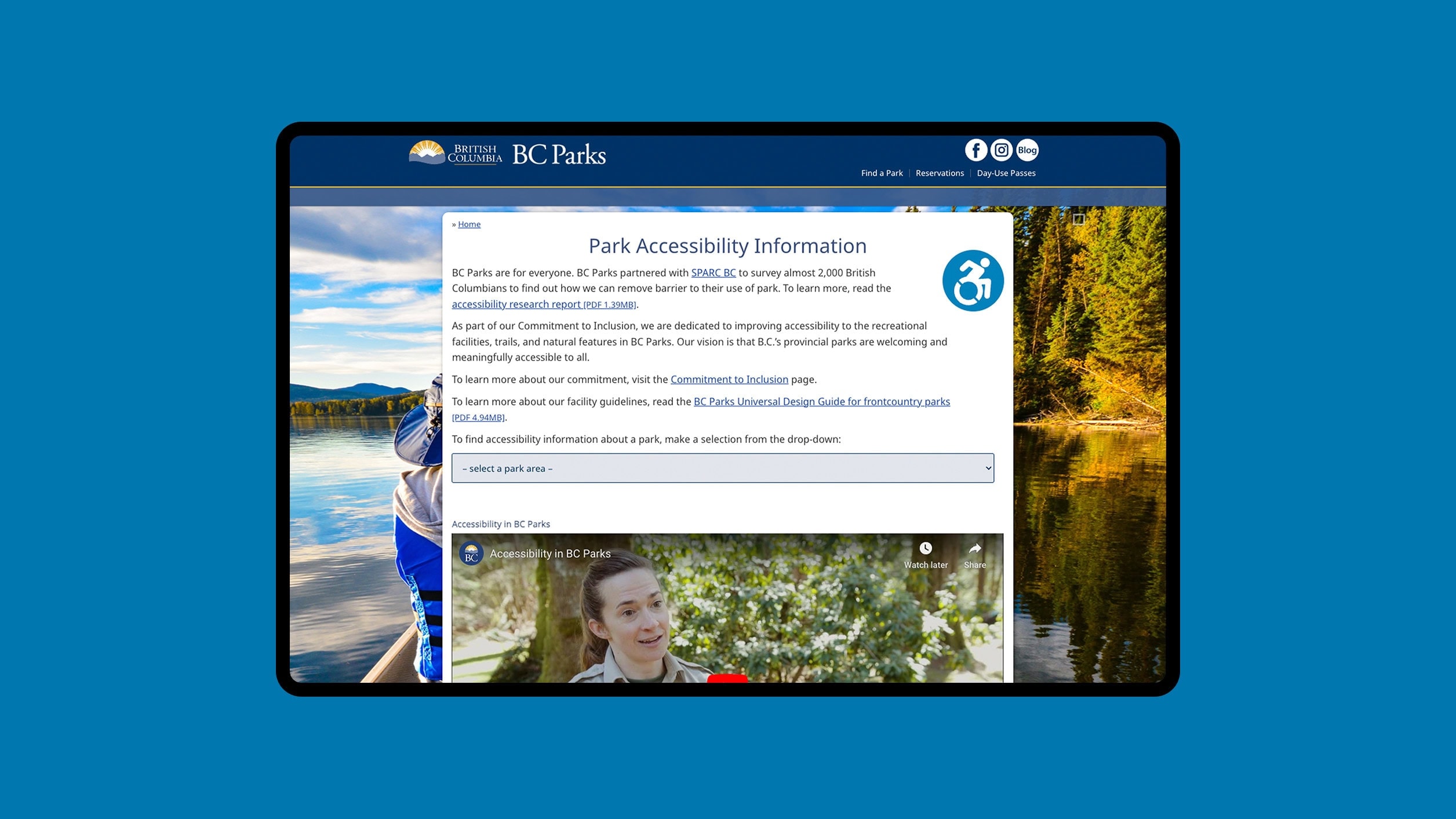
BC Parks is dedicated to preserving British Columbia's natural spaces and ensuring recreation in those spaces is accessible for everyone. However, their current accessibility microsite only provides information for a narrow set of accessibility concerns and lacks updated information for a wider audience with diverse needs.
Our team identified valuable but outdated information on accessibility.bcparks.ca. When the site was initially built, park students collected photos of accessibility features, but BC Parks staff didn’t have the resources to regularly update the site. We needed a solution to keep it up-to-date.
Our solution: Using AI tools and crowdsourcing.
Our goal was to create a dynamic, personalized resource for park visitors with diverse accessibility needs. Using AI, we envisioned a platform where users could find up-to-date information. Using crowdsourcing, we were able to solve the lack of up-to-date accessibility feedback.
Example Use Cases:
A visitor with a broken leg could check if paths are crutch-friendly.
A visitor with limited vision might want screen-reader-friendly park descriptions.
A neurodivergent visitor could determine if a park is too busy for comfort.
With AI-powered semantic search, users could search terms such as “no stairs,” and the system would return related results, including “senior-friendly” or “stroller-accessible,” even without exact matches.
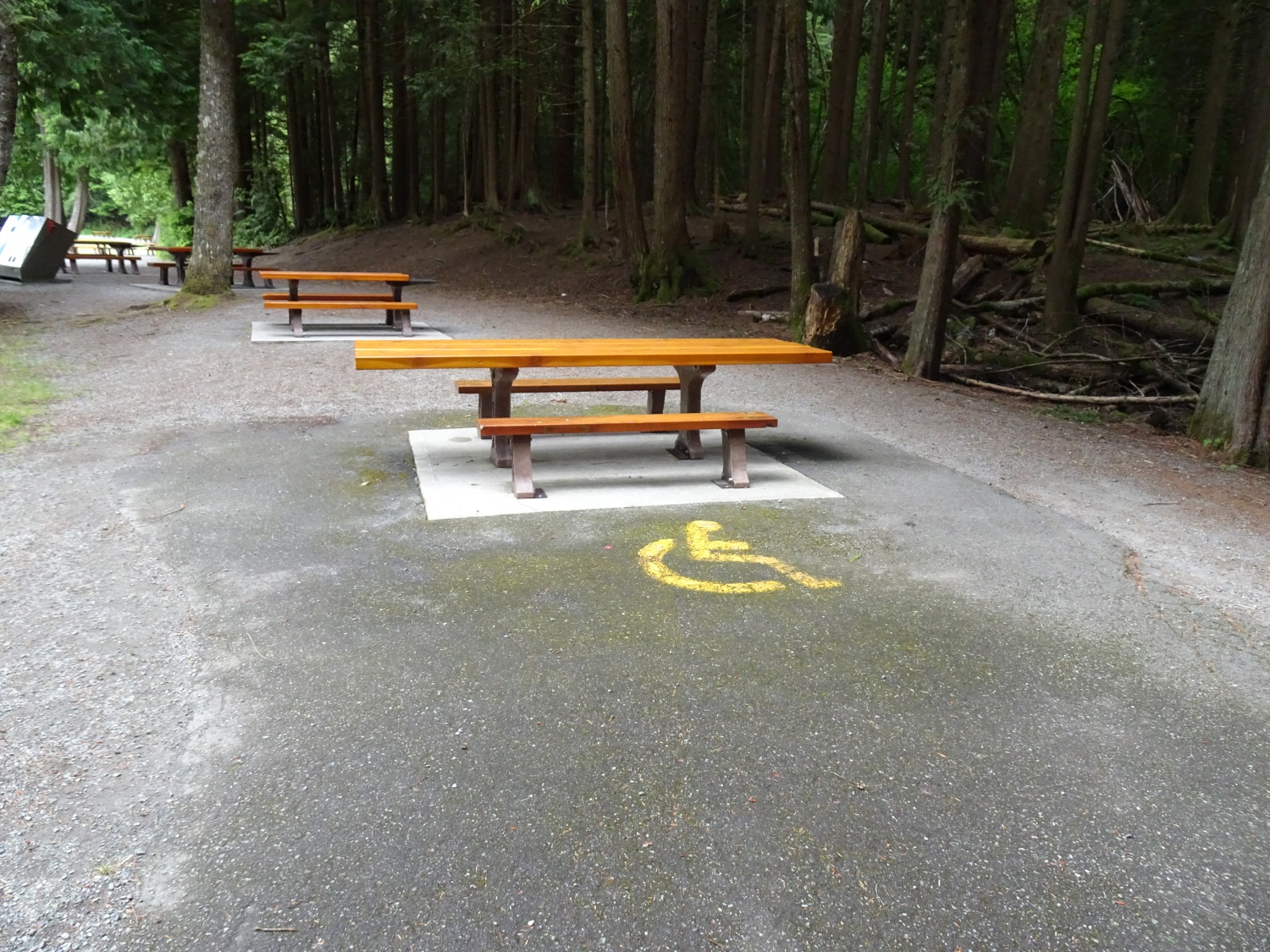
The accessible picnic area at Alice Lake Park. Source: BC Parks
Our approach
OXD assembled a team of 11 experts, including six staff members from our ongoing BC Parks project and five additional enthusiasts. Using the existing data from accessibility.bcparks.ca, we developed a mobile-first web app to:
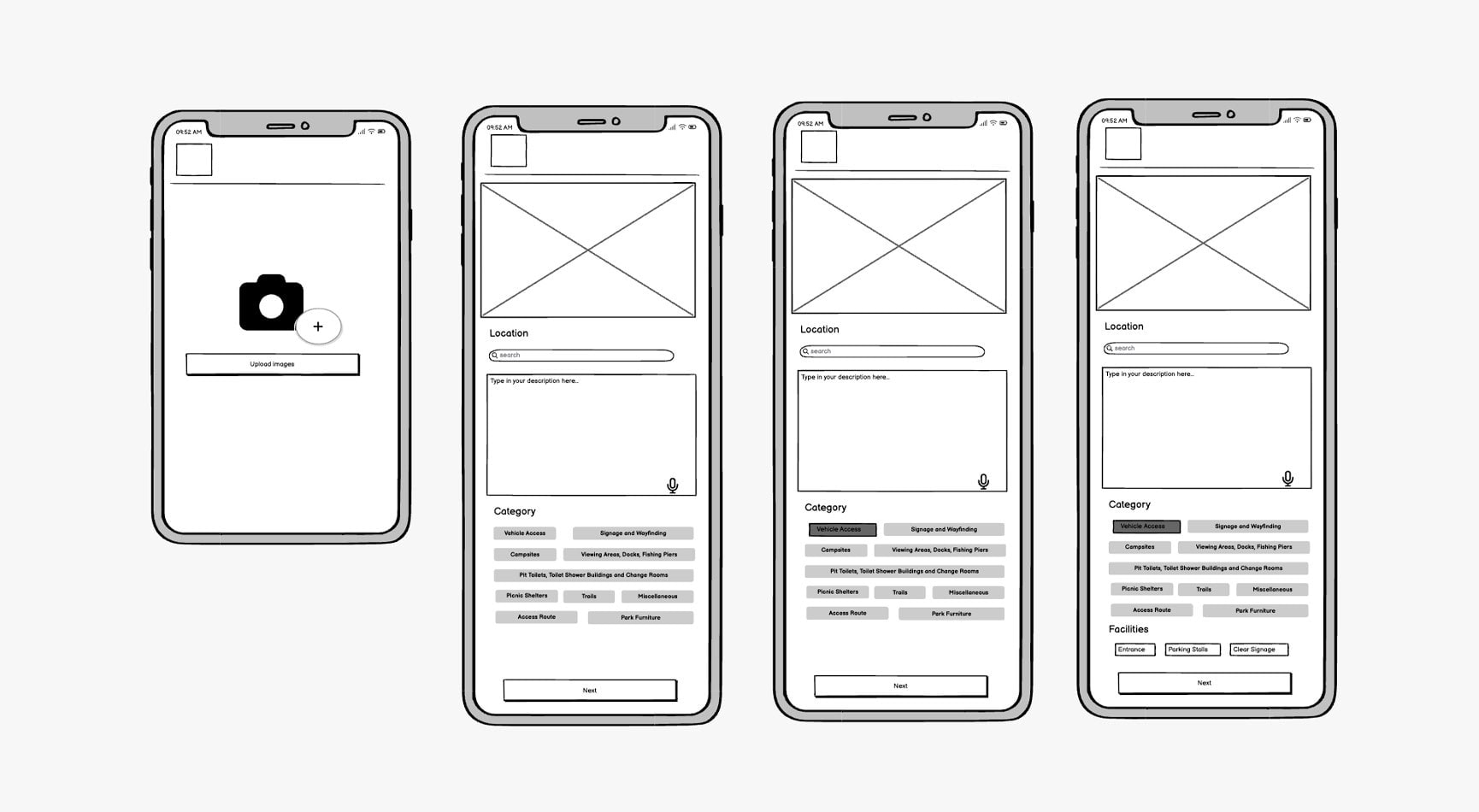
Allow users to upload park accessibility feedback and images.
Use AI to tag accessibility features from visitor feedback
Provide intelligent, semantic search functionality by finding tags that matched a user’s search query.
Use relational database queries to return parks with matching tags.
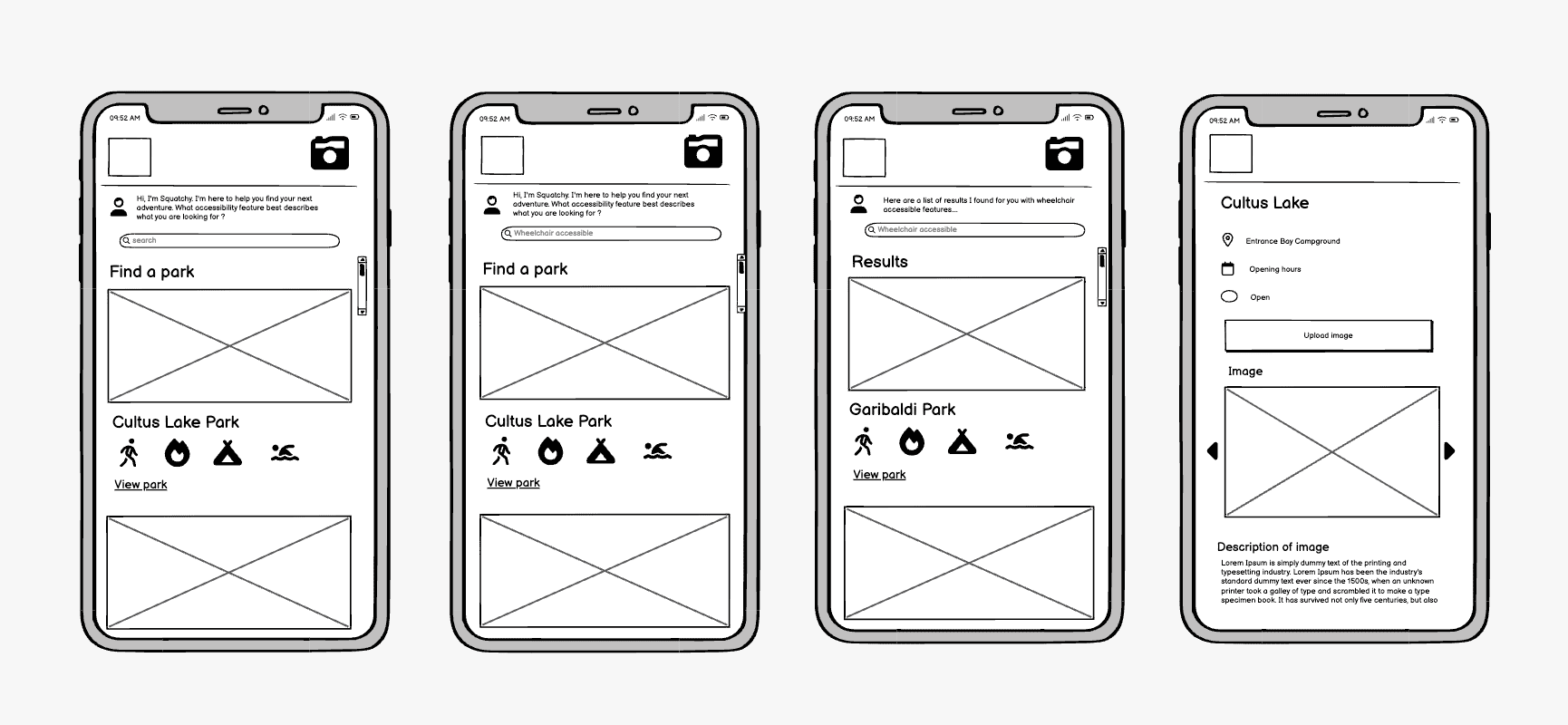
Park Search wireframesFeedback wireframes
We then built wireframes for two user flows: visitors looking for accessible parks and visitors adding new information about accessible features.
Our technology stack included:
OpenAI API for natural language processing (NLP)
Django + Django REST Framework + PostgreSQL for database management
Vue.js + Quasar for frontend development
Docker for local development containerization
GitHub with a CI/CD pipeline that automatically built the app and deployed it to the Amazon cloud infrastructure (as mentioned below) as the code was changed or updated
Hosted on AWS (Elastic Container Service, S3) for cloud infrastructure
Our solution
In two-and-a-half days, we developed a prototype that demonstrated the power of combining AI with crowdsourced data to enhance park accessibility information. Using semantic search, we were able to take unstructured information (information that either doesn’t have a predefined data model or isn’t organized in a pre-defined manner) from existing visitor feedback text and output the data to support a broader range of search needs.
Key features included:
User-friendly accessibility review submission
AI-powered tagging for a standard list of accessibility features; when a park visitor submits feedback, the model will most relevant tags
Semantic search to match user queries with relevant park features
Integration of existing data from the website for enhanced accuracy
The possibilities this opens up for accessibility at our beautiful BC parks are awesome! Well done, OXD Gastown Gumberoos.”
Hackathon organizer
Our team identified several additional areas for improving park accessibility through AI tools and crowdsourcing that couldn’t be fully explored within the hackathon’s time constraints. These include collecting more granular feedback on specific park areas, refining AI models for better tagging accuracy, and using AI to assess visitor feedback sentiment. We also saw potential in AI-supported image moderation, analysis, and data extraction to streamline crowdsourced information, as well as gamification strategies to encourage real-time user contributions.
[...] OXD took this opportunity to explore some potentially cool ideas. It’s amazing how much creativity can come out when folks have a couple of days to focus on something. It’s great inspiration for the team as we explore a permanent and modern solution to this work."
Hackathon organizer
With our experimental prototype, an artificial intelligence model interprets user submissions to find parks with accessibility features that match their requirements. Users can describe features in plain language, and the AI will search through our database of user feedback.
Our results and their future impact
Within the two-day hackathon, our prototype showcased the power of combining AI and crowdsourced data to enhance park accessibility. Our app allowed users to submit accessibility feedback, which AI tagged with standard features and processed through semantic search to match users’ specific needs. Features included user-friendly submission forms, intelligent tagging, and integration of existing data for accuracy. The BC Parks team was enthusiastic about the potential: “The possibilities this opens up for accessibility in our parks are awesome!”
At OXD, we believe technology can make public spaces more accessible for everyone. Want to explore how AI and crowdsourcing can enhance your services? Contact us today to bring innovative, user-centred solutions to life.
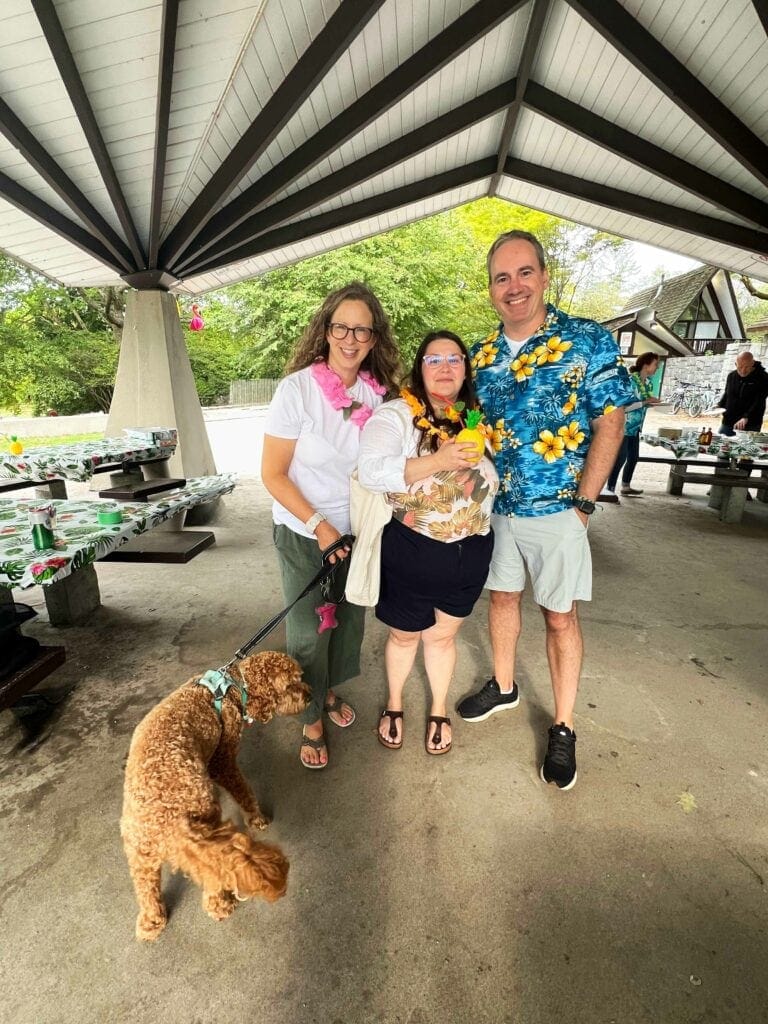
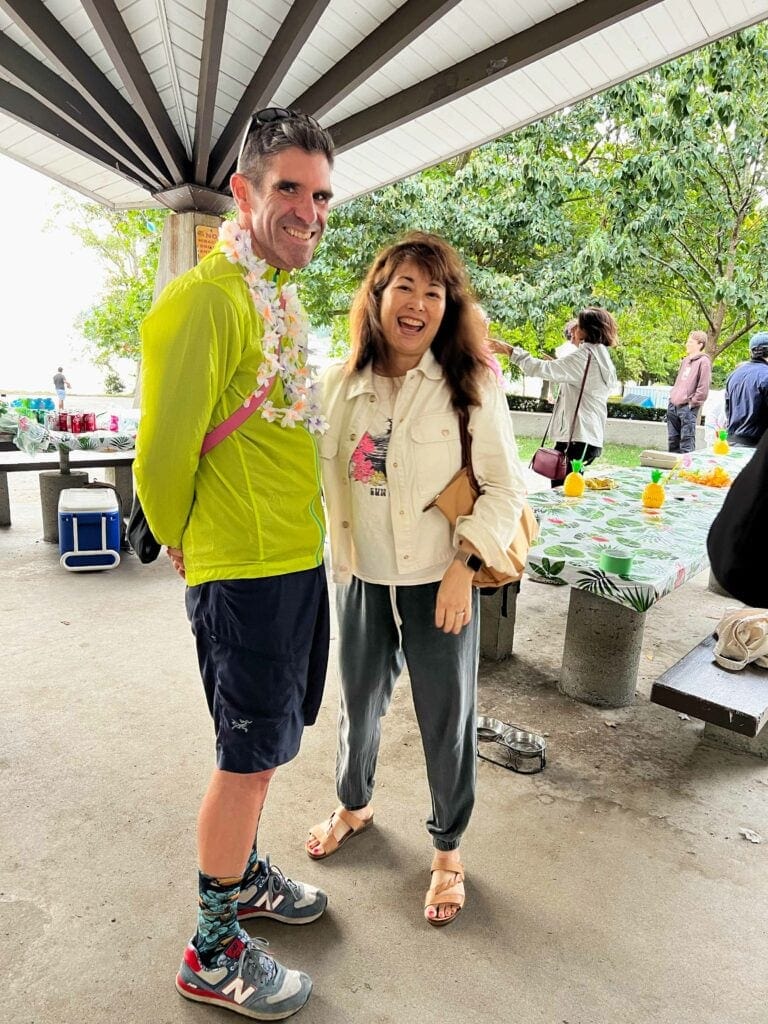
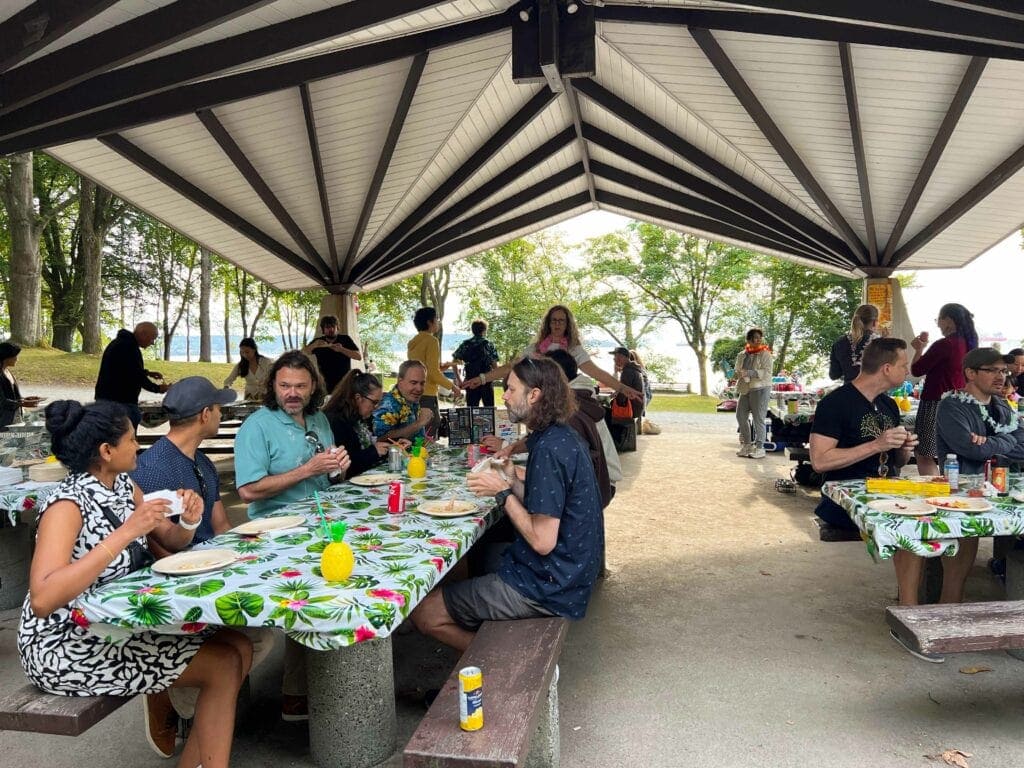
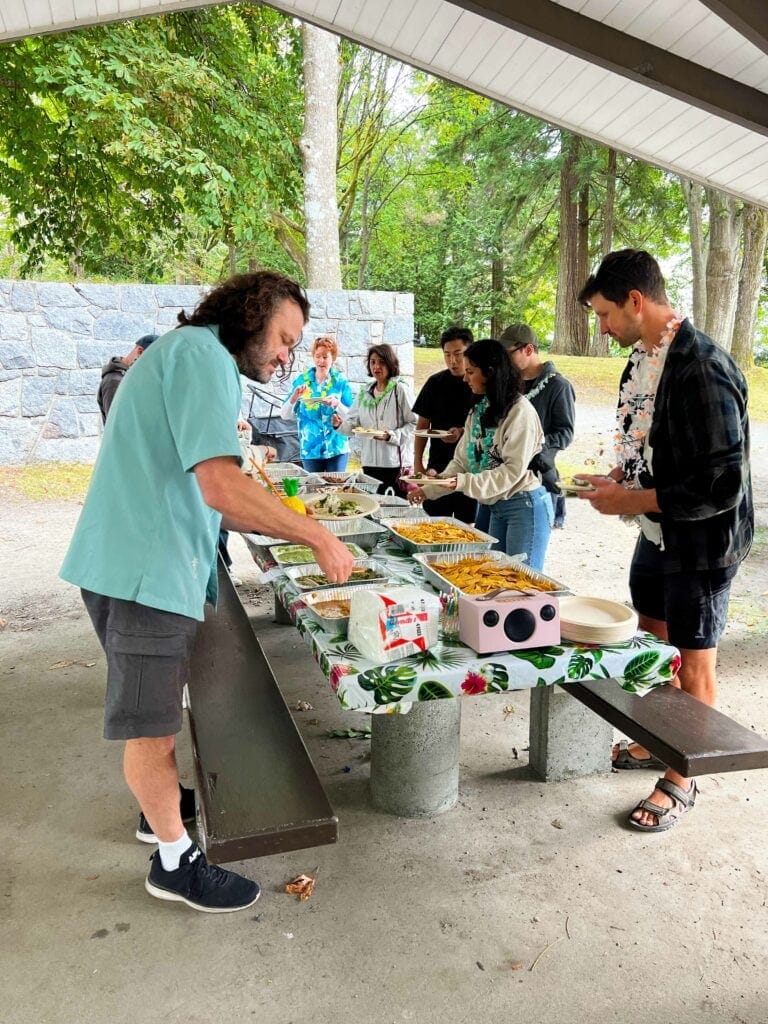
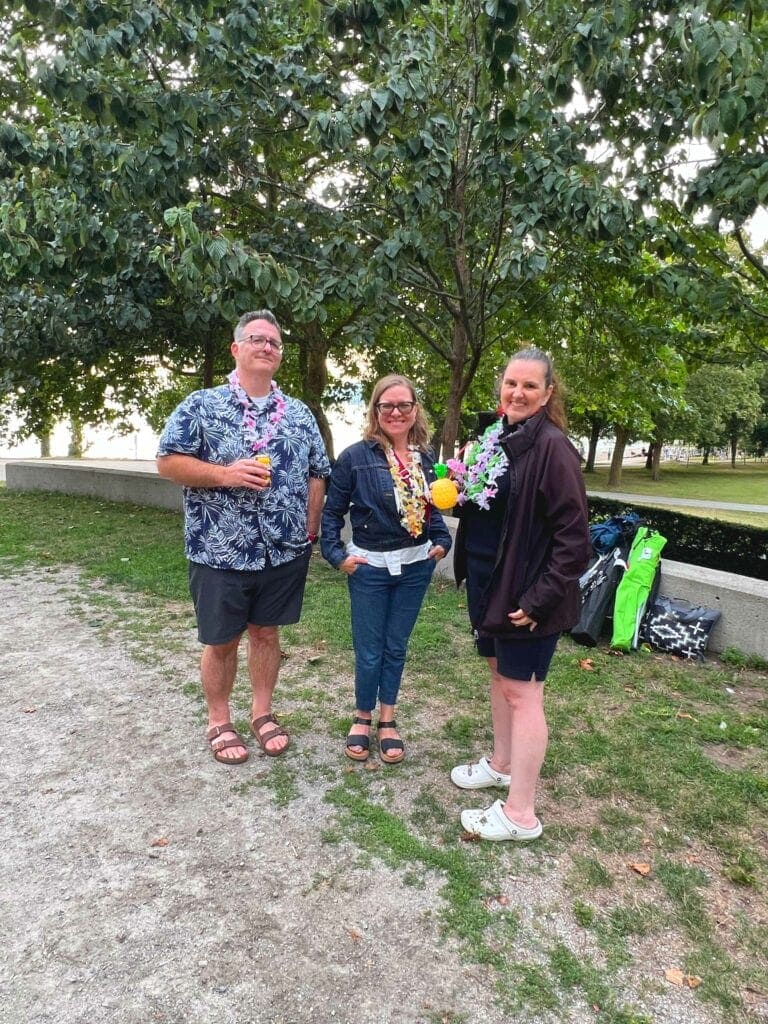
Another year has come and gone since our last summer picnic at Stanley Park! This year, we were fortunate to nab the Second Beach Pavilion. And even though our tropical-themed event may not have had the weather to match, we had a blast anyway! Here are a few pics from an evening filled with shared laughs, cute pups, and plastic pineapples!
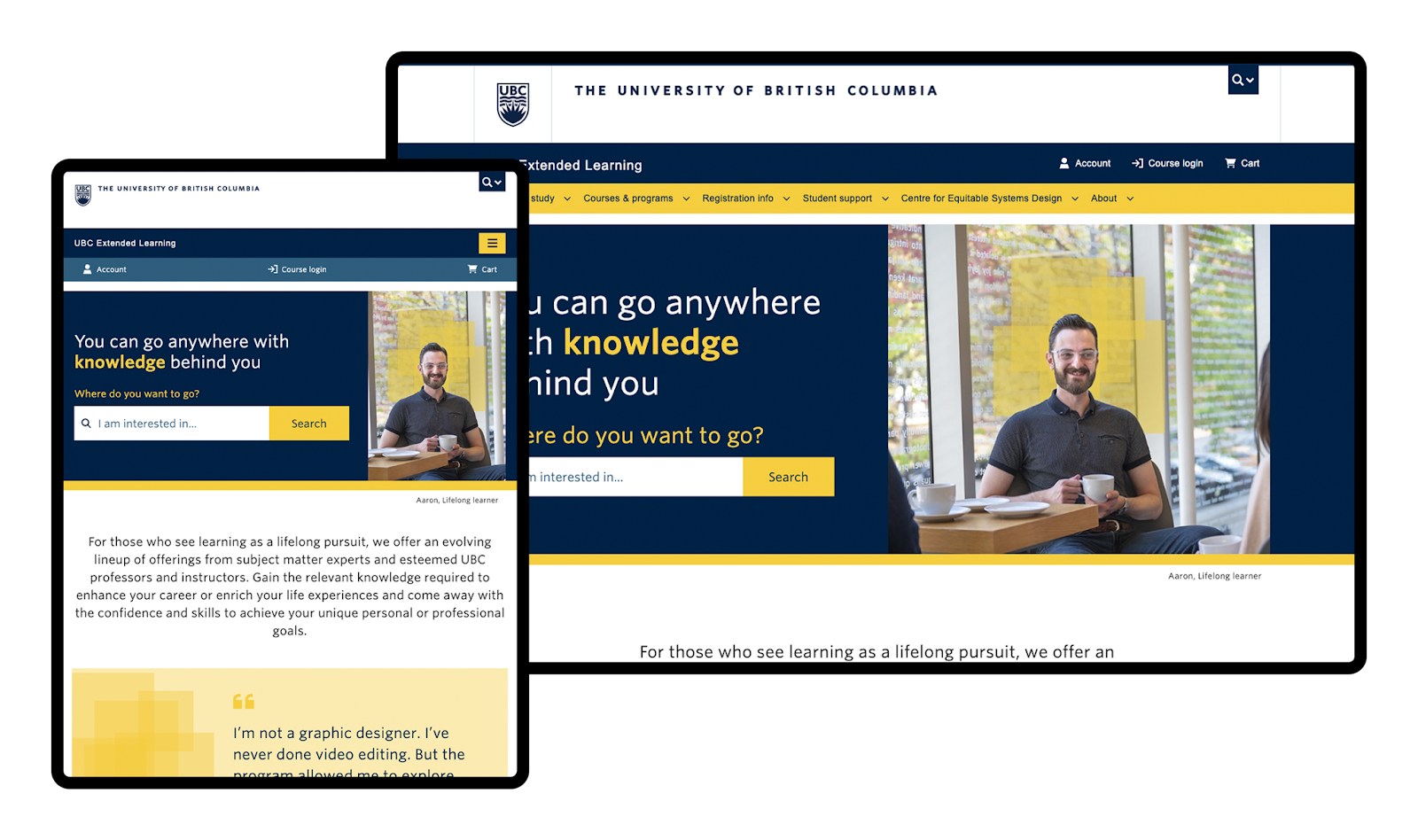
The University of British Columbia's Extended Learning website (UBC ExL) offers flexible learning opportunities to lifelong learners globally, combining excellence in teaching, academics, and research. Ranked among the top universities in the world, UBC ExL focuses on personal and professional growth, delivering a variety of online and blended courses to meet the needs of learners at all stages of life.
The UBC ExL site is vital for communicating offerings to the external community, prospective students, and faculty partners. The original site, with over 350 sections and an outdated registration system, no longer met business needs.
The UBC ExL team partnered with OXD to create a new responsive e-commerce Drupal website. We began with a discovery phase to understand user needs through journey mapping workshops, competitive analysis, content audit, and technology review. These findings informed our project goals and service outcomes.
During the redesign, we reimagined the information architecture using content analysis, card sorting, and task testing. Our user experience team developed intuitive page flows and wireframes, while our creative team ensured the design aligned with functionality. Usability testing was conducted to resolve any performance issues.
OXD’s redesign of the UBC Extended Learning site addressed critical pain points, transforming it into a dynamic, easy-to-navigate, and functional resource for all users.