Reflections from Gordon Ross on the #SDinGov 2018 conference in Edinburgh on who service designers might be and what that means for an evolving design genre.
Me and my polar bear shirt speaking about uncomfortable knowledge at #SDinGov 2018 / photo @w_harmer
Last month, I attended and spoke at the Service Design in Government conference in Edinburgh. I made the 7000km sojourn from Vancouver to Scotland to give a presentation on some of the design for policy work we’ve been doing and to be with a group of people whom I feel a great deal of professional affinity. It was my second time attending, having presented in London in 2017 on our service design work for the Ministry of Justice here in BC.
I may not work as a public servant or as a service designer embedded in a government department, but I spend a good number of my hours working along side them, attempting to make government services less obtuse, easier to use, and hopefully resulting in positive civic and societal outcomes. My professional identity and sense of professional community is very much influenced and shaped by practicing service design in, for, and with government.
Every year the BC Library Association gathers its members together to discuss the evolving role libraries play in our cities and communities across BC. This year, I was honoured to receive an invitation to speak at the annual conference.
I've always been a big fan of libraries - from a child who visited regularly, to a university student who camped out in the stacks researching and writing essays, to now a parent returning to the children's collection on weekends. I've also had the pleasure of working with librarians: I helped redesign the Vancouver Public Library's website back in 2007, have done a lot of work in the public legal education and information space with the team at Courthouse Libraries BC, and currently I'm serving my second year as a Trustee of the Board of the Vancouver Public Library. Continue reading "Goodbye Cyberspace, Hello Code/Space at the 2015 BC Library Association Conference"
At the start of 2014, we called cross channel experiences a major trend to watch. While cross channel remains important, we are seeing an evolution to omni-channel experiences. Omni-channel focuses on creating a consistent experience across all customer touch-points, where cross-channel is often limited to only a portion of the experience. Disney is a great example of the "magic" that happens when a true omni-channel experience is delivered.
Historical limitations of cross-channel
One cross-channel strategy may focus only on the digital channel. It ensures the digital experience works across all browser and operating system platforms, various screen sizes, and device types. While this is a worthy effort, it leaves out all of the other channels a customer may come in contact with such as in-store and call centres. Another cross-channel strategy tries to ensure a consistent experience via branding and information provided across all physical and digital touch points. Again a worthy and important effort, but still short of a truly omni-channel experience.
Omni-channel
Omni-channel concentrates on delivering seamless experiences through all available touch points with a product or service via mobile internet devices, computers, brick-and-mortar locations, television, radio, direct mail, catalog and so on. Customers expect every interaction with a brand to be integrated through their journey of discovery, research, purchase and support. Planning and executing an omni-channel strategy is a way to meet or exceed customer expectations.
Omni-channel experiences strive to seamlessly weave digital and physical touch points together across all channels, allowing customers to achieve their goals whenever and however best suits them. Omni-channel experiences are frictionless in that they can start on one device or channel and be quickly and easily completed on another channel or device without having to start over or backtrack. Omni-channel strategies strive to enhance physical channels with digital augmentation and ensure digital experiences have appropriate physical analogues so no digital divides exist and so customers can operate in their channel of choice.
Disney's omni-channel user experience
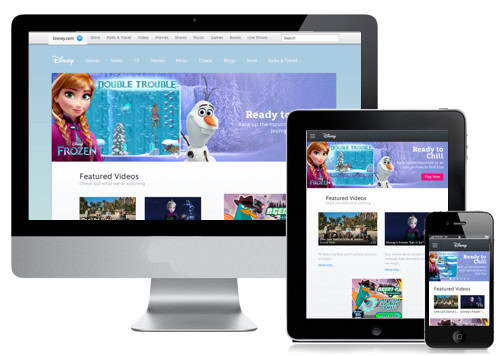
Disney's website at desktop, tablet and mobile phone sizes
Lets look at how Disney is delivering omni-channel experiences for visitors to Walt Disney World. The experience typically starts at disney.com, a responsive website that works across device types: computer, tablet and smartphone. Even their trip planning site is optimized for the mobile device.
Once a trip is booked to Walt Disney World Florida, guests can use My Disney Experience to book in-park dining reservations and plan FastPass experiences. FastPass allows park guests to skip lines for three attractions per day. Using the My Disney Experience smartphone app in the park, guests can check and change their FastPass choices and check other attraction wait times while on the go.
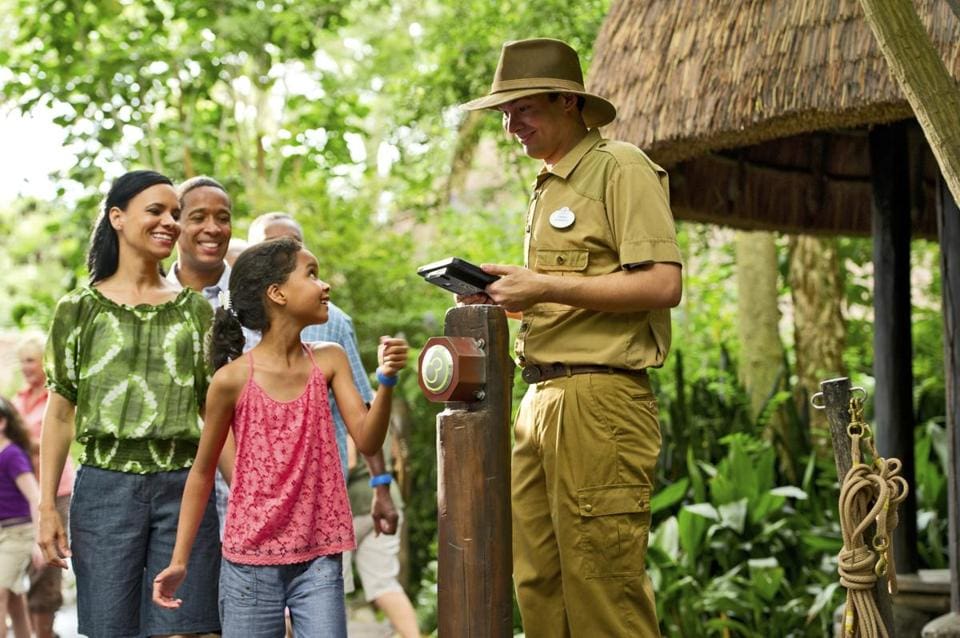
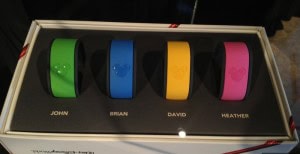
These innovations make for fun trip planning and theme park experiences, but Disney is truly forging new omni-channel experiences with their MagicBand program. The MagicBand is a wristband embedded with short-range RFID and long range Bluetooth technologies. It’s an opt-in system so guests control how much personal information they share with the park. The more information guests share, the more customized theme park experience they receive. For example, in Disney resort hotels, MagicBands are used as room keys. Just tapping your wristband unlocks the door. Guests can also order food with their wristbands at Disney restaurants and food carts.
Disney's MagicBand RFID wristbands
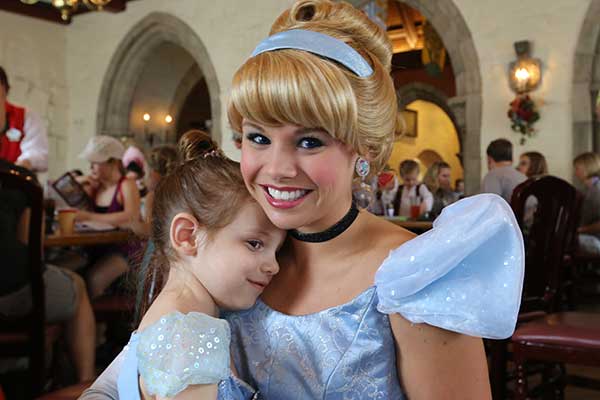
MagicBands also integrate with FastPass and PhotoPass systems. Once set up, you can walk to the front of an attraction line, tap your wrist, and on you go. If your picture is taken with a Disney character by a park photographer, they will scan your MagicBand and your photos will be available online for purchase later. The old PhotoPass system for purchasing photos online involved manual data entry by the user, whereas the new experience is virtually seamless.
The park experience feels “frictionless” with the use of MagicBands, My Experience apps and FastPass. The best parts of the Disney park experience are made better via subtle digital enhancement. There is something magical about skipping to the front of the line to have your child’s picture taken with a beloved Disney character and then conveniently ordering the photos online later.
This is both an example of an existing omni-channel experience, as well as the current high water mark for experiences that move between the physical and digital.
MagicBand integration with Disney's PhotoPass system
Summary
When relentlessly focusing on the quality of the experience you are delivering, you have to look at all of your customer touch points to deliver seamless experiences choreographed between all channels, physical and digital.
The first step to creating omni-channel experiences is to create a strong strategy focused on customer needs. This is accomplished through research, culminating in a Customer Journey Map. A journey map depicts the step-by-step interactions a user has through all of the touch points with your product or service. Once completed, this design artifact helps key decision makers identify opportunities for improvement or differentiation that can help drive the strategy.
Once identified, opportunities can be worked out through storyboarding and refined via service or experience prototypes; these prototyping methods involve users in simulations so the end experience can be evaluated and modified if necessary before actually launching the enhancements. Simulations can be done in a lab-like environment but it is strongly encouraged to do a limited live run to verify what impact external factors not possible to verify in the laboratory have on user perception and experience. This was the approach taken by Disney with their MagicBands: look at the customer journey; identify pain points and opportunities; design, test and iterate.
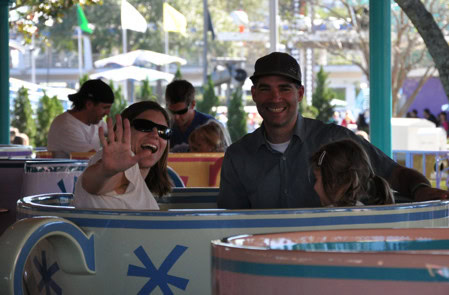
OpenRoad's Trevor Allen and his family gave MagicBands a spin
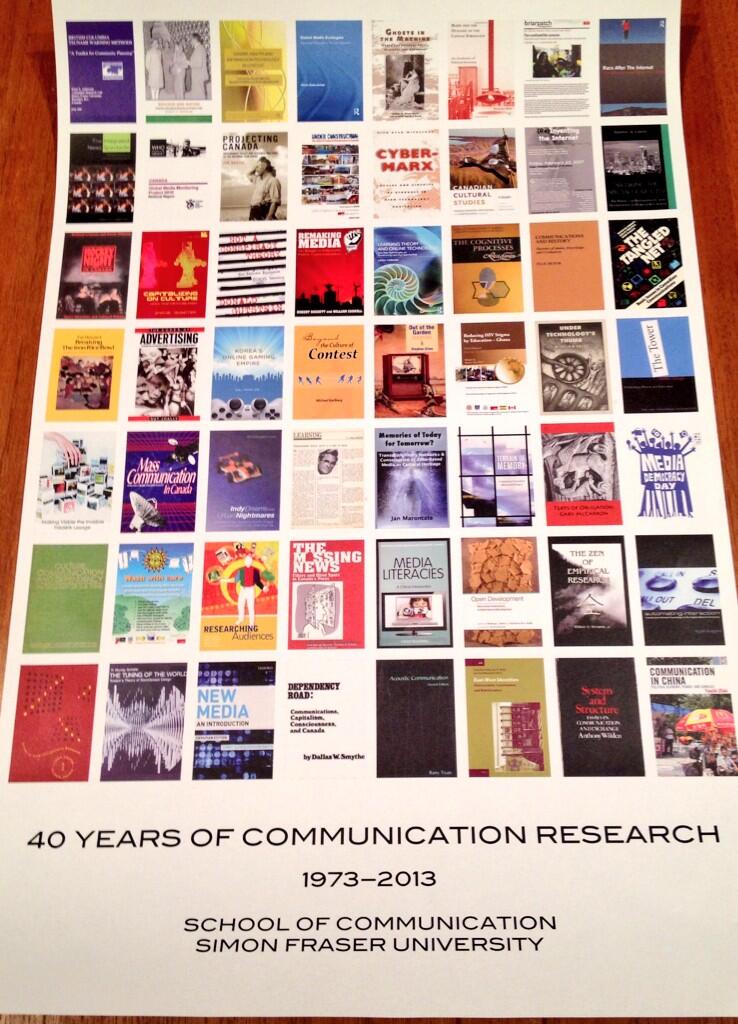
It's hard to believe it was 20 years ago that I nervously attended my first university lecture at Simon Fraser University - a life changing moment to be sure. My alma mater just turned 40 this fall - SFU's School of Communication, now part of the Faculty of Communication, Art, and Technology - and they celebrated in style last night at the elegant downtown Segal Graduate School of Business.
I was asked to speak and share my thoughts on their theme of Staying Relevant, something that not only plagues middle-aged graduates, but post-secondary institutions themselves in challenging economic times.
Thanks again to all of the outstanding alumni who attended last night, Dean of FCAT Cheryl Geisler, Director Alison Beale, event organizer Ovey Yeung, and to the professors who left an indelible mark on an impressionable mind. Continue reading "Celebrating 40 years with SFU’s School of Communication"
The web analytics practice involves more than reporting on what happened, it’s about distilling valuable insights and turning them into strategic action plans. The Certified Web Analyst (CWA) program seeks to recognize these forward-thinking analysts, with a standardized professional designation.
We are proud to announce that Bryan Robertson, our Analytics and Performance Measurement Practice Lead, is now one of 136 Certified Web Analysts worldwide and one of only three in Vancouver, BC.
Launched in 2010 by the Digital Analytics Association, the Certified Web Analyst designation is relatively new. Candidates must meet education and industry experience thresholds before applying to write the exam, which has only 50% pass rate. Equipped with over 16 years of experience in the internet industry, and a B.A. in Communications, Bryan recently wrote his exam on the Microsoft campus, in Redmond, WA.
Following his exam, Bryan took in the Seattle Predictive Analytics Symposium. Featuring keynote speakers from Microsoft and Adobe, and a theme of “Moving up from Reporting”, the symposium sought to move beyond simple storytelling, and accurately predict “how” and “what’s next”. Key areas of discussion included predictive marketing, media-mix modeling, real-time reporting, segmentation and data visualization.
We sent Jennifer Weng and Amanda Bremner to NN/Group's Usability Week recently. How usable was usability week? Let's find out...
As UX Designers, we are naturally attuned to identify usability wins and fails, along with their sources. These are by no means limited to our digital experiences, but apply to our real-world experiences as well. Our recent adventures to the Nielsen Norman Group Usability Week, a week-long workshop style conference held across the world several times throughout the year, provided some great examples of good usability and service design (I mean, they DO research and practice usability!), but also some insight into areas for improvement. Let’s see how a usability conference fared in its usability!
OpenRoad is proud to be the Global Industry Partner for User Experience (UX) at the Wavefront Acceleration Centre, a federally-funded mobile commercialization centre located in Vancouver aimed to help foster mobile innovation, research and development, and product development. With our partnership, we've been working with Wavefront members to iterate and improve their mobile solutions concepts (applications and web-based) through UX design coaching and usability evaluations.
To help educate members on the benefits of adopting a user-centred design approach throughout the design process, OpenRoad provides seminars on mobile strategy, user interface (UI) design principles, and usability best practices. Continue reading "Defining a mobile strategy that works"
Following the August 8, 2012 launch of the new City of Vancouver website, I joined the City of Vancouver Director of Web Redevelopment Laurie Best and Intentional Design's Rahel Bailie to discuss the information architecture and content strategy behind the new site in a joint presentation on August 14 at City Hall.