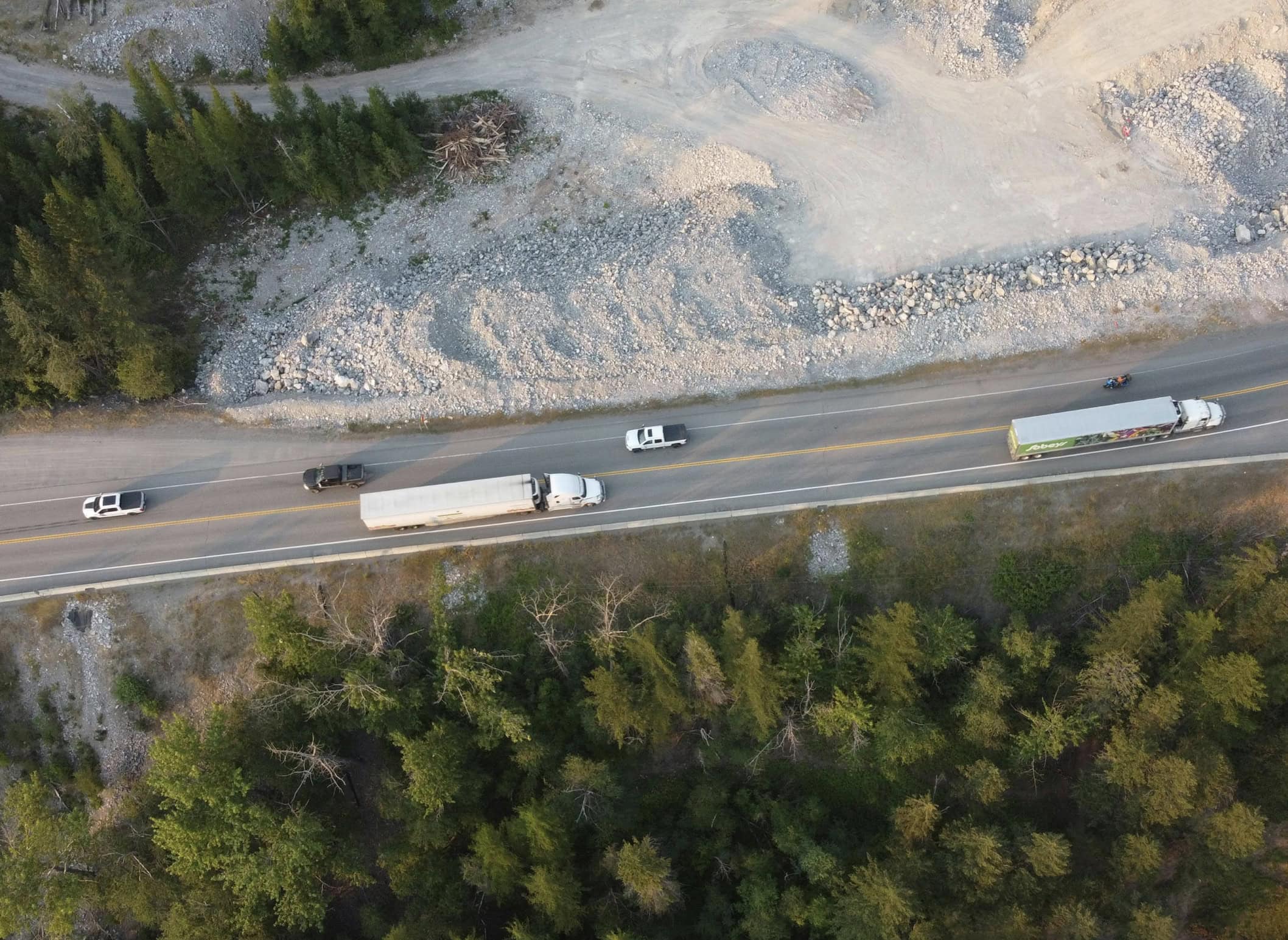


DriveBC Mission
A resilient, personalized, timely, and trusted digital resource to support the safety and mobility of BC travellers in their travel decisions.
Impact at a glance
OXD joined forces with Ministry of Transportation and Transit staff to form an integrated team. Together, the team modernized the legacy DriveBC digital service while continuing day-to-day operations, until the transition was complete. Results included:
- 100 times load capacity during extreme weather events—with zero service failures
- Self-managing team equipped to pivot, prioritize, and respond to emerging requirements
- Unified operations ensuring technology and people work together under pressure during critical events

The British Columbia Ministry of Transportation and Transit operates DriveBC.ca—the province’s busiest government website with millions of user sessions every month—providing critical road information for travellers. Their core mission: be a trusted digital resource that helps people make safe, informed travel decisions.
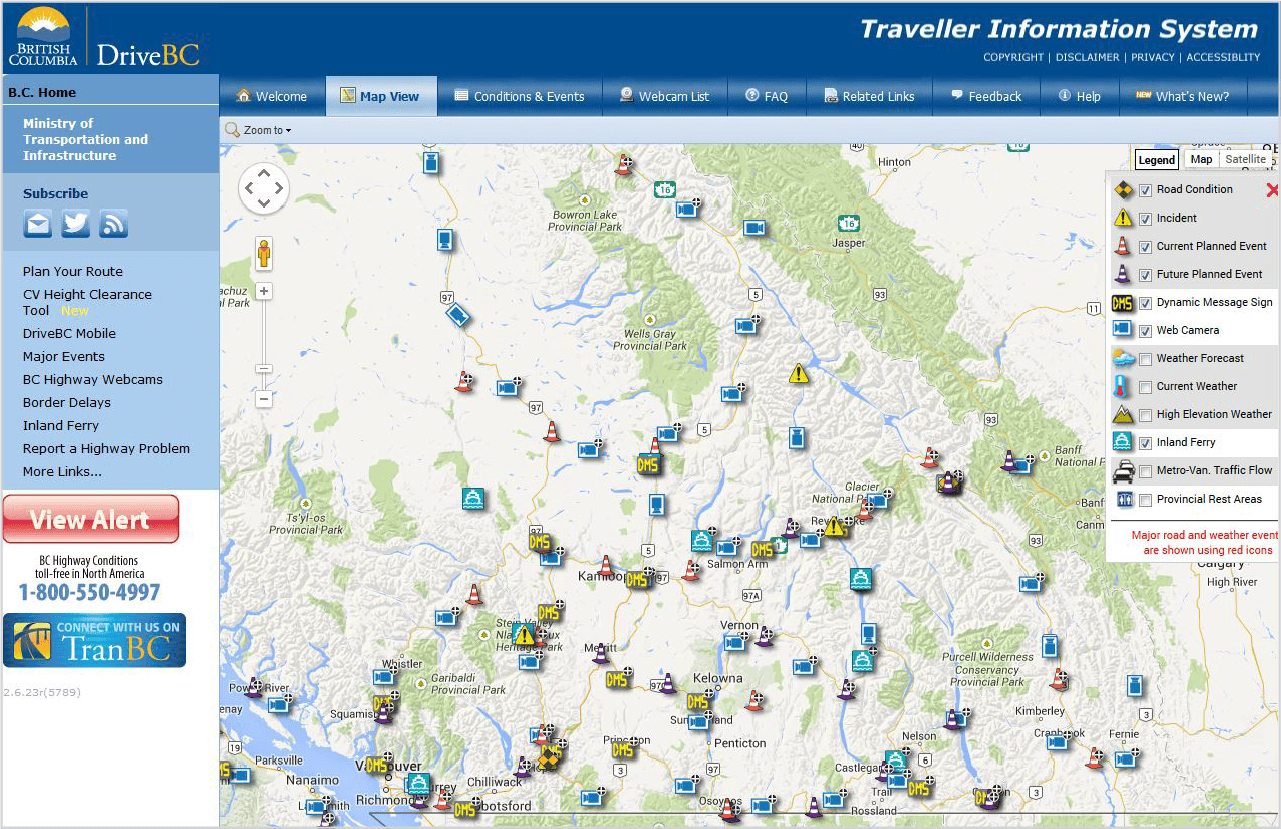
The modernization of DriveBC represented significant technological change, re-factoring and replacing some of the many interconnected systems that powered the nearly 20-year-old DriveBC legacy site. At the same time, it represented organizational change, working with staff whose roles would need to adapt to new technologies and Agile ways of working.
Ministry staff and OXD came together as one team, rather than working in a traditional client-vendor “do the work for us, deliver the system, and leave” paradigm. Instead, client and vendor team members worked with each other across operational tasks to keep the legacy site functioning during the project as well as the new design-build activities, sharing expertise and knowledge amongst the team, building organizational capability and resilience along the way.
The challenge
In our work with government, we often encounter critical legacy systems, short-staffed support teams, and the mandate to modernize without breaking what works or disrupting day-to-day operations.
For DriveBC, a small internal team had been maintaining a legacy platform for over a decade, patching failures during emergencies, managing workarounds, and working in an environment where morale was low and the system often felt too fragile to touch. The platform would at times fail during extreme weather events, exactly when travellers needed it most, leaving the team scrambling to keep the service alive in real time.
The technical complexity was compounded by organizational complexity. The platform relied on data from multiple external partners—highway cameras controlled by five different entities, weather information from provincial sensors and Environment Canada, and ferry schedules from both inland and coastal operations. Each data source represented a relationship the team needed to maintain, and each partner needed confidence that modernization wouldn’t disrupt the integration.
So the modernization project wasn’t just a technical rebuild. The real challenge was managing change on multiple fronts: building trust within the internal team that modernization was possible, maintaining trust with external agencies who supplied critical data, and navigating cross-agency reorganization—all while keeping the service running. Delivering on the technology was required. Delivering on the relationships with the people who manage and use the service would ensure the initiative’s ultimate success.
Our approach
Earning trust and building capability
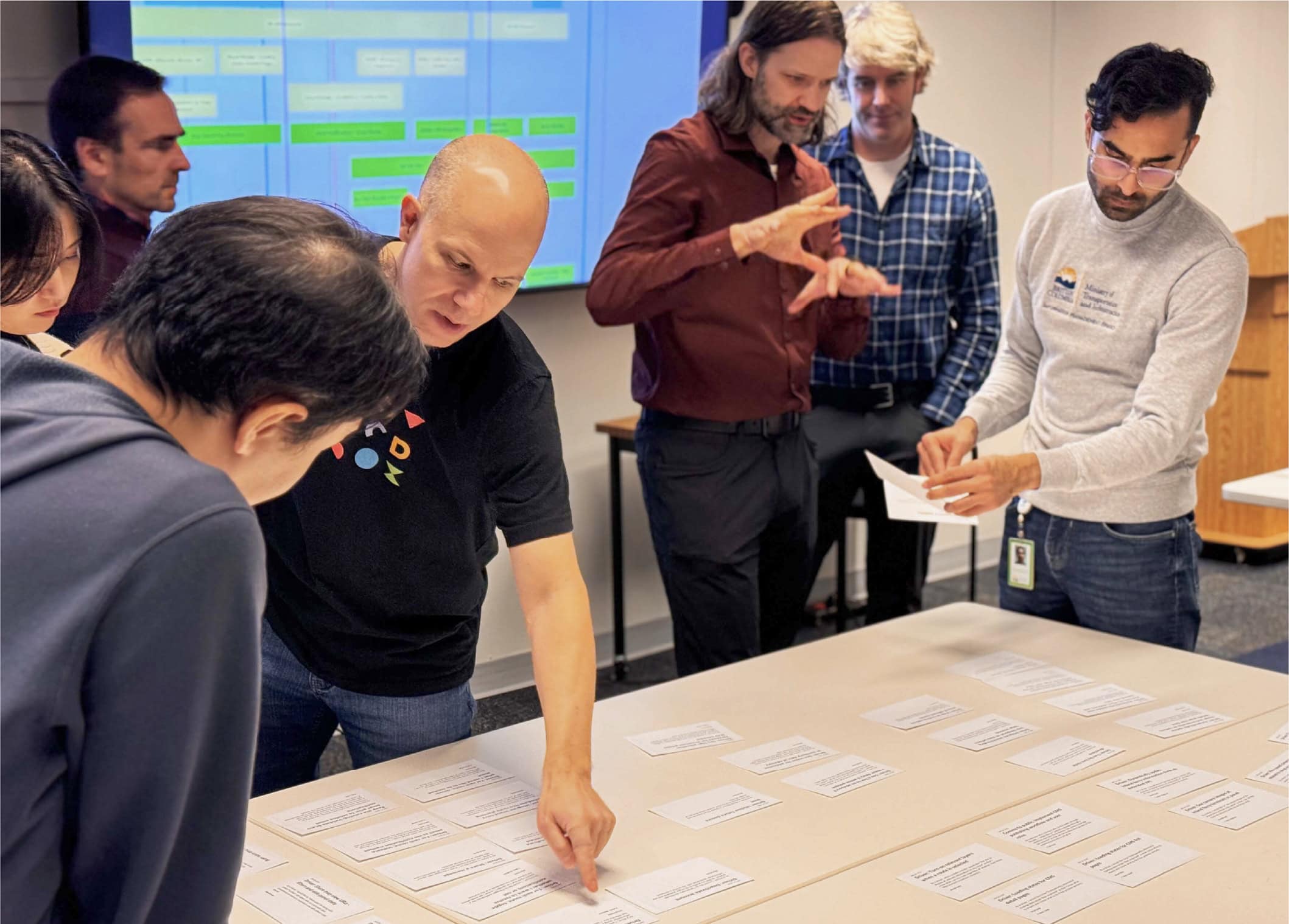
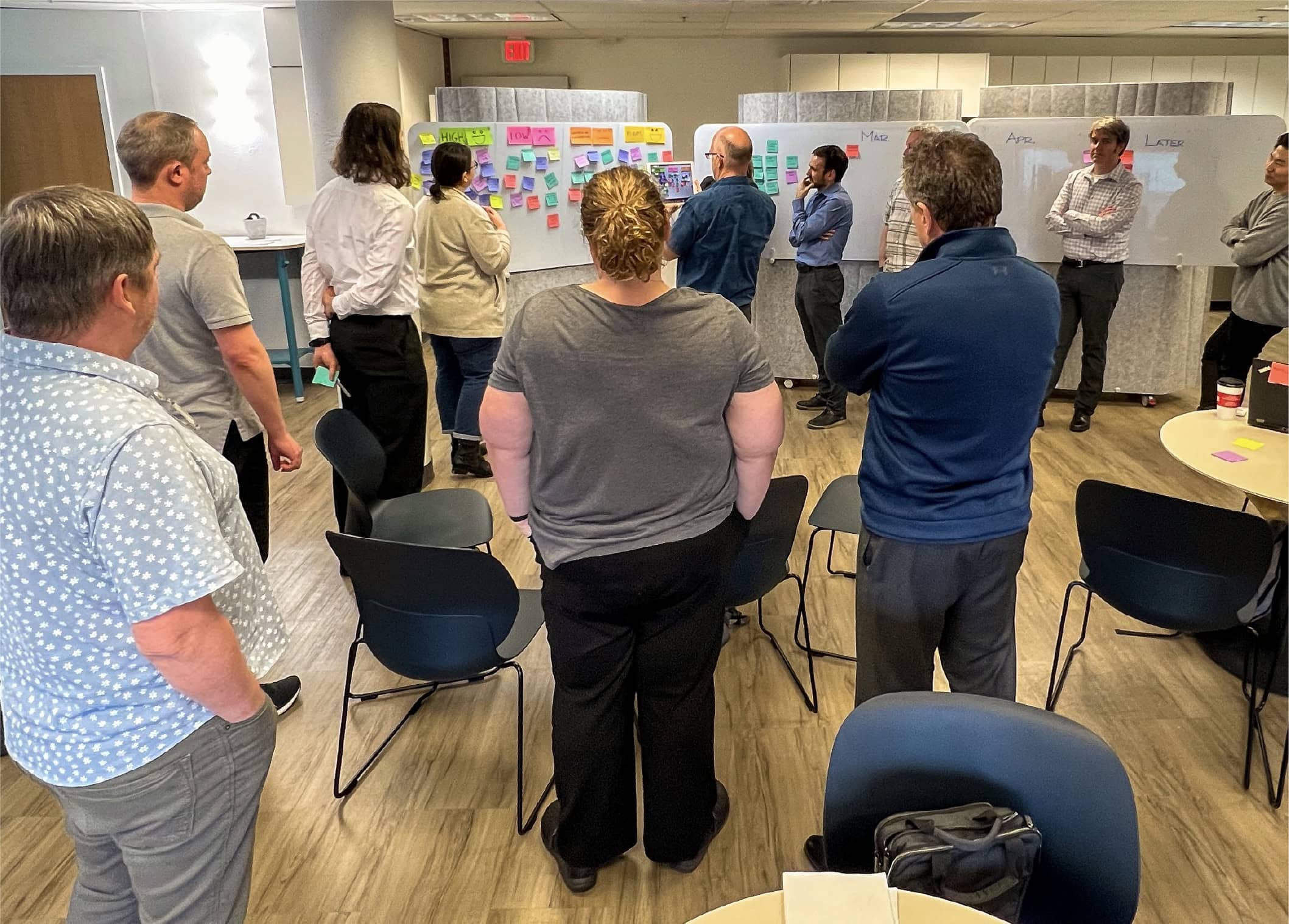
Rather than the traditional “get the vendor to build the thing” model, OXD professionals joined DriveBC’s team for over two years of daily collaboration. We didn’t just build features—we built capability and trust.

Working principles to drive change
- Earning trust through partnership: We kept the legacy site running while building the new one, went on field trips to operations centers, and maintained open communication across all government agencies involved. This showed respect for what the team had built and ensured no one was left behind in the transition.
- Collaborative leadership: We worked with leaders who made change real, not just talked about it, creating a unified voice across the organization. Ministry staff participated in every sprint, participating in prioritizing what to build next, user research, and technical decisions.
- Agile as a mindset: Using an “Agile is a mindset, not a rulebook” approach, the team maintained DriveBC’s 20-year reputation for accuracy while gaining the adaptability to respond to emerging needs.
- Shared understanding: The service blueprint we created together—a detailed map of how staff, systems, and the public interact—captured the user-facing platform, operational workflows, and staff responsibilities needed to maintain accuracy during emergencies.
Technical wins rooted in operational reality
This collaborative approach meant that technical decisions reflected operational reality. When real-time map updates were causing performance issues during high-traffic periods, our developers worked directly with DriveBC operations staff to understand exactly when and how updates were triggered. Together, the team redesigned the update process to prioritize emergency information while batching routine changes—a solution that balanced technical performance with operational needs, and one the DriveBC team could maintain independently.
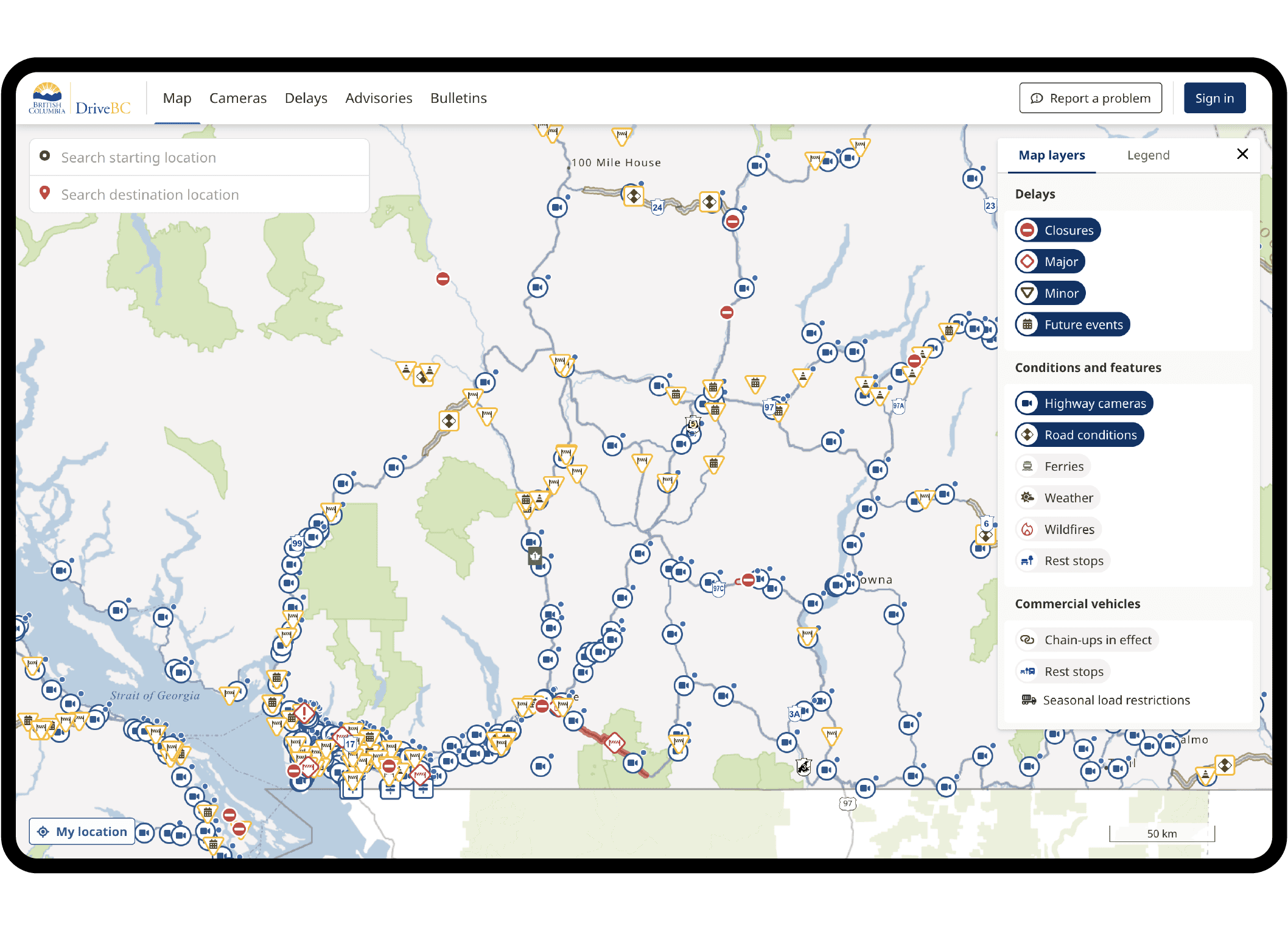
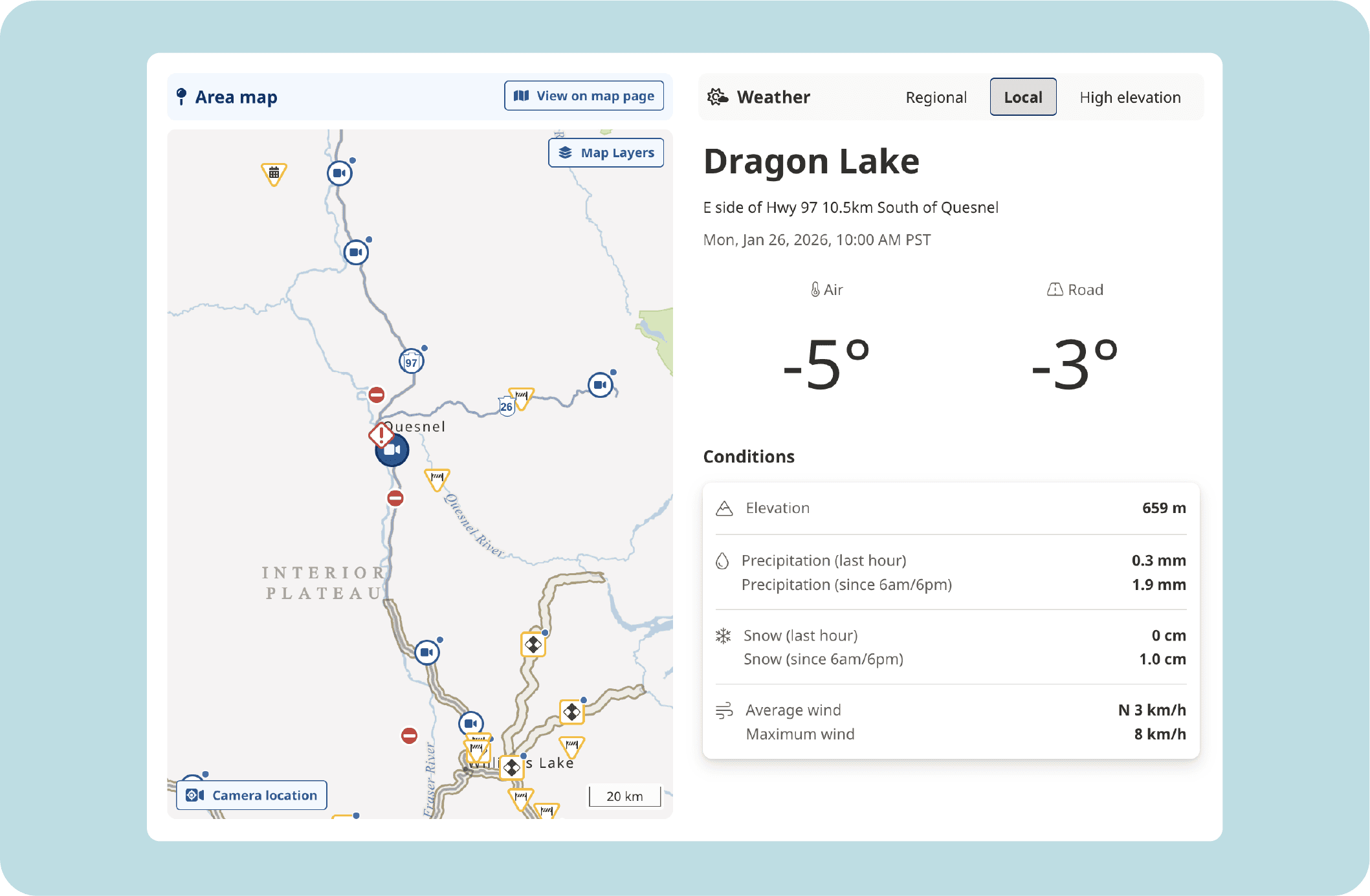
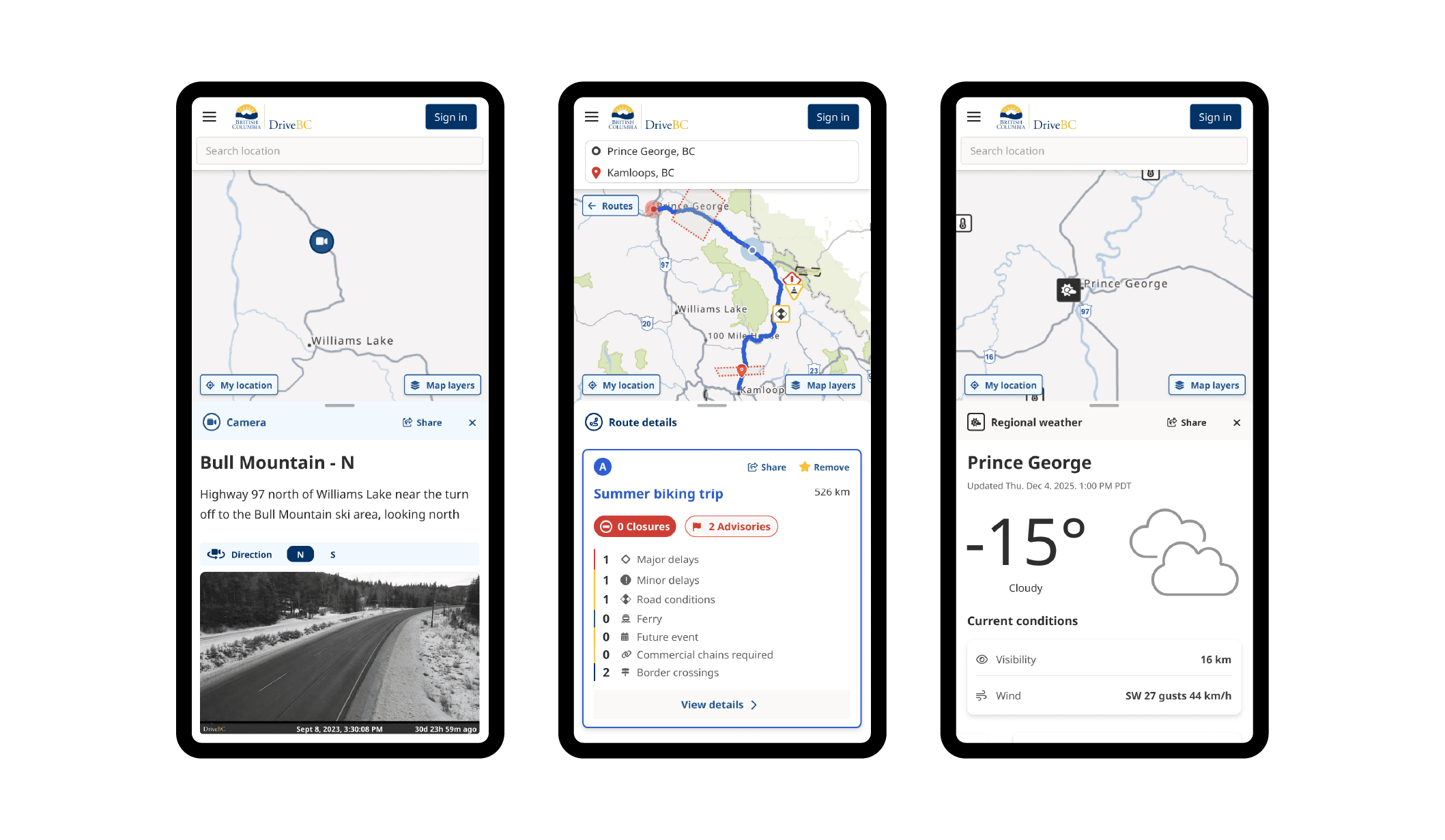
Guided by DriveBC’s vision and working as a unified team, development efforts focused on three key priorities: stability (resiliency to maintain trust during critical events), usability (adapting to user feedback to deliver relevant features), and flexibility (empowering staff to respond to emergencies without technical dependencies through their new content management system (CMS)). The team redesigned how the platform handled high-traffic events triggered by extreme weather events like flooding, fires, and snowstorms by implementing load balancing and caching to handle 100 times the spikes in load. They also built the CMS so DriveBC staff could issue travel advisories and update zones on the map in real time, all without needing a full redeployment.

The result: Going beyond launch to a self-sufficient team
The launch of the new DriveBC.ca site went smoothly and as planned. But the real success was the team itself. What changed? A team that once feared touching the legacy system now maintains and evolves the platform independently. Developer intervention was once required for every informational update. Now operations staff can respond in real time through a new CMS.
Through our shared journey, the DriveBC team embraced Agile principles, learned new technologies, and built the capacity to continue evolving the service, keeping travelers in BC safe and informed for their next trip.